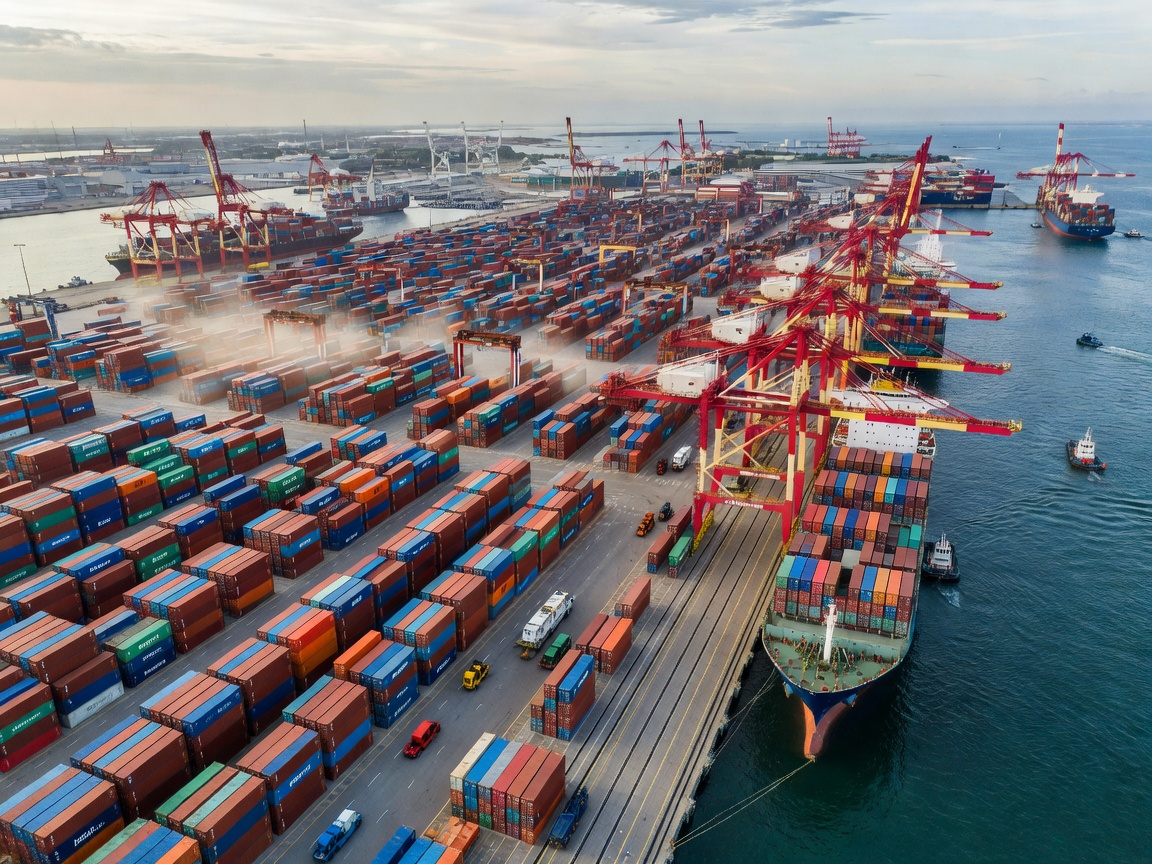
The Port of Vancouver is not a single location, but a vast network of 29 major terminals stretching across the Burrard Inlet, the Fraser River, and Roberts Bank. Its geography is carefully organized to handle everything from containerized consumer goods and automobiles to bulk agricultural products, minerals, and breakbulk cargo. This diversified operational capacity is what positions Vancouver as the premier maritime gateway connecting North America to the Asia-Pacific region.
Container Terminals
Container traffic is a massive pillar of the port’s operations, driven primarily by four major container terminals. The largest of these is Deltaport, located at Roberts Bank. Known for its deep-water access, Deltaport can accommodate the largest ultra-large container vessels (ULCVs) navigating the Pacific. It features extensive on-dock rail facilities, allowing seamless transfer of cargo from ships directly to the expansive rail networks crossing the continent.
Within the inner harbor (Burrard Inlet), Centerm and Vanterm handle substantial container volumes. Centerm has recently undergone massive infrastructure expansion projects to increase its footprint and capacity without dramatically expanding its environmental footprint. These upgrades involve state-of-the-art gantry cranes, optimized truck gate operations, and enhanced rail loading systems. Across the inlet, Vanterm operates as another critical node, providing rapid discharge and turnaround times for trans-Pacific shipping lines.
Fraser Surrey Docks on the Fraser River is a versatile facility. While it primarily handles breakbulk, steel, and lumber, it also processes containerized cargo, serving regional markets and acting as a pressure release valve when the inner harbor terminals operate at peak capacity.
Bulk and Breakbulk Infrastructure
A significant portion of Canada's resource export economy flows through the specialized bulk terminals at the Port of Vancouver. Agricultural exports—such as wheat, canola, and specialty crops from the prairie provinces—are processed through highly automated grain terminals scattered along the waterfront. These facilities utilize complex conveyor systems, towering silos, and rapid ship-loaders to minimize turnaround times for bulk carriers.
Beyond agriculture, the port facilitates the movement of vital industrial minerals. Coal and potash are heavily exported, utilizing specialized deep-water berths. Terminals handling these dry bulk commodities employ rigorous dust suppression technologies to mitigate environmental impact on the surrounding urban areas. Liquid bulk, including petrochemicals, edible oils, and renewable fuels, is handled through dedicated pipeline-to-ship infrastructure.
Auto Roll-on/Roll-off (RoRo)
The Annacis Island Auto Terminal is a cornerstone of the port's RoRo (Roll-on/Roll-off) capabilities. This facility handles the vast majority of Asian automobile imports into Canada. Ships explicitly designed to carry thousands of vehicles dock on the Fraser River, where the cars are driven off the vessel, processed through extensive inspection and staging yards, and eventually loaded onto railcars or specialized transport trucks for national distribution.
Strategic Capacity and Future Expansion
Operating a port of this magnitude within a constrained, densely populated urban environment presents significant challenges. Land scarcity forces terminal operators to focus on densification—moving more cargo through the same footprint. This has driven the adoption of automated yard cranes, sophisticated terminal operating systems (TOS), and predictive logistics software.
Furthermore, long-term capacity concerns have prompted environmental assessments and planning for potential terminal expansions, such as the proposed Roberts Bank Terminal 2 project. These plans are scrutinized rigorously, balancing the national economic necessity for increased trade capacity against the critical need to preserve delicate marine ecosystems, including tidal mudflats and critical habitats for native fish and cetaceans.
The careful choreography of these 29 terminals demands precise coordination between terminal operators, the port authority, labor unions, rail companies, and the trucking sector. It is this interconnectedness that allows the Port of Vancouver to function as a unified, highly efficient economic engine on the global stage.