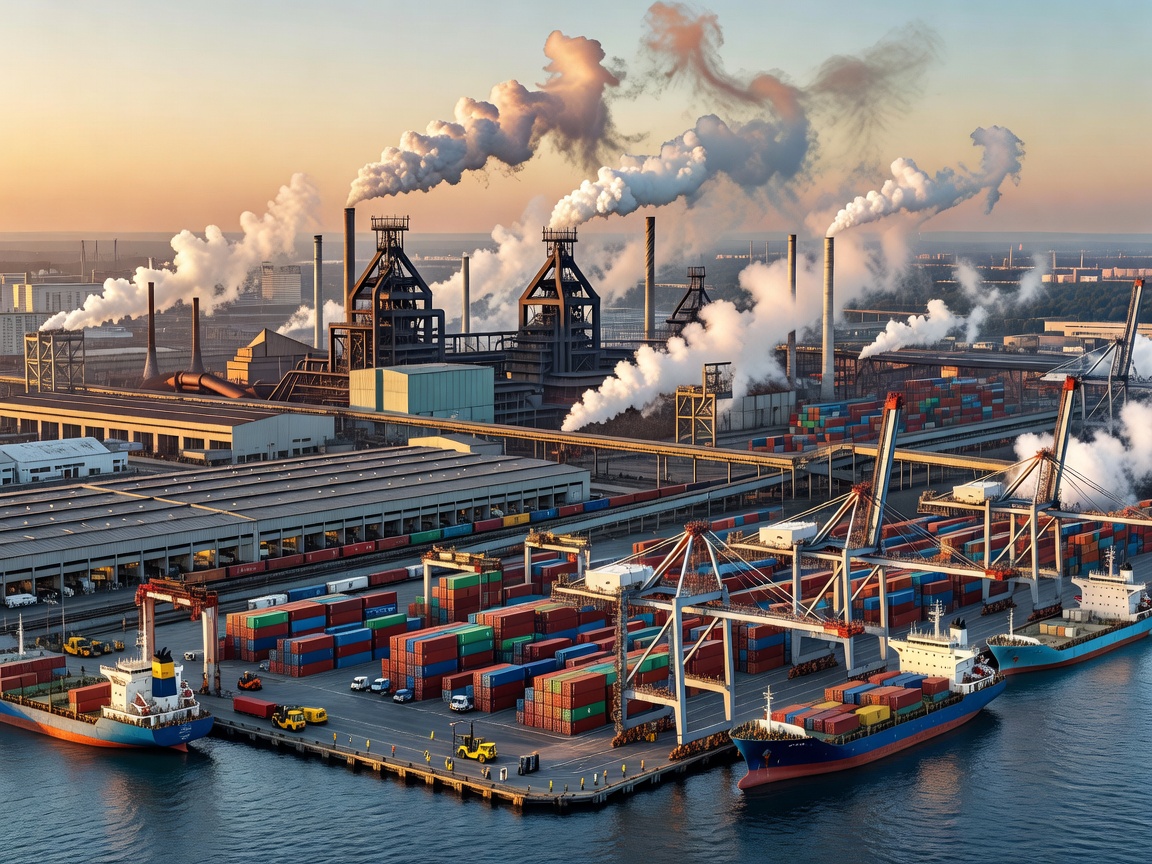
The Port of Vancouver is an irreplaceable economic engine, not just for the province of British Columbia, but for the entirety of Canada. As the nation’s largest port, it serves as the critical gateway connecting domestic industries—from prairie agriculture to central Canadian manufacturing—to over 170 trading economies worldwide. The sheer volume of cargo processed annually reflects a scale of trade that underpins the national Gross Domestic Product (GDP).
Employment and Job Creation
The economic footprint of port activities extends far beyond the waterfront. Terminal operations alone generate a massive amount of direct employment, including longshoremen, crane operators, logistics coordinators, and maritime security personnel. However, the indirect and induced employment figures are even more staggering.
Surrounding the port is a dense ecosystem of supporting industries. Trucking companies, railway operators, freight forwarders, customs brokers, and warehousing facilities all depend directly on the flow of goods through the port terminals. Additionally, the marine services sector—encompassing tugboat operators, naval architects, maritime lawyers, and ship chandlers—relies on a consistently high volume of vessel traffic. Collectively, these sectors provide well-paying, stable jobs that support thousands of families across the Lower Mainland and beyond.
Facilitating National Trade
A port's primary economic value lies in its ability to facilitate trade efficiently. For Canadian exporters, particularly those in the resource sectors, the Port of Vancouver is the lifeline to the lucrative Asia-Pacific markets. Billions of dollars in agricultural products, forestry materials, minerals, and specialized manufacturing goods depart these terminals annually. The efficiency of the port directly impacts the global competitiveness of Canadian commodities; a bottleneck in Vancouver equates to lost revenue and compromised reliability for exporters located thousands of kilometers away in Saskatchewan or Alberta.
Conversely, for importers, the port is the primary entry point for consumer goods, electronics, textiles, and automotive parts coming from Asia. The smooth operation of the port ensures that retail supply chains across Canada remain stocked and that domestic manufacturers receive the components they need without debilitating delays. This flow of imports keeps consumer prices stable and domestic industries operational.
Infrastructure Investment and Real Estate
The massive economic activity generated by the port drives continuous capital investment in regional infrastructure. Hundreds of millions of dollars are routinely injected into upgrading rail corridors, improving highway interchanges, and expanding terminal capacities. These large-scale civil engineering projects provide sustained employment for construction and engineering firms.
Furthermore, the port's presence dictates commercial real estate trends throughout the region. The demand for industrial land—specifically for distribution centers, transloading facilities, and cold storage—has transformed areas like Delta, Surrey, and Richmond into massive logistics hubs. This industrial demand significantly contributes to municipal tax bases, allowing local governments to fund public services and infrastructure.
Summary
To view the Port of Vancouver merely as a collection of docks and cranes is to misunderstand its macroeconomic significance. It is a highly complex, interconnected hub of international commerce that injects billions into the Canadian economy. The continuous optimization of its operations is not just a regional priority, but a matter of national economic security.