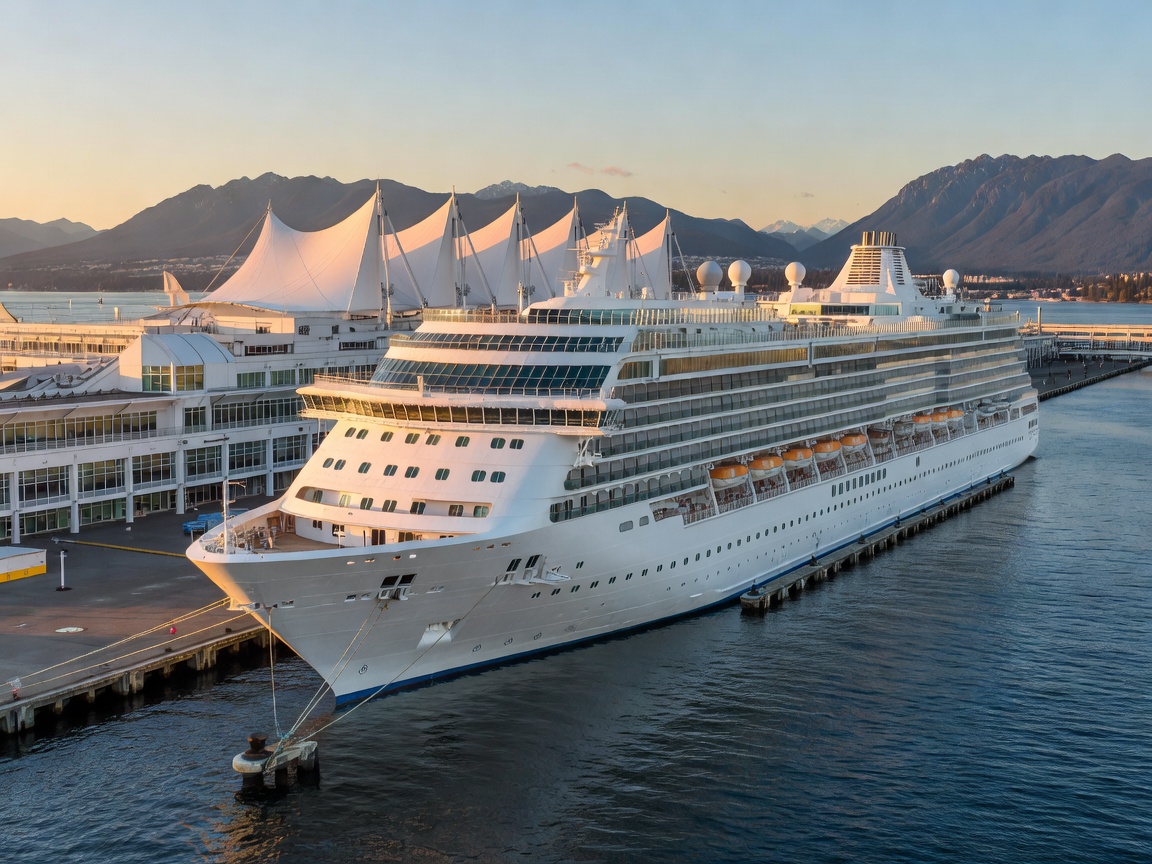
While industrial freight is the bedrock of the port's volume, its cruise operations represent one of its most publicly visible and culturally significant sectors. Positioned perfectly on the Pacific Northwest coast, Vancouver is an internationally recognized, award-winning homeport for the lucrative Alaska cruise market. The seasonal influx of vessels and passengers requires massive logistical orchestration and generates profound impacts on the local tourism economy.
The Canada Place Terminal
The epicenter of cruise operations in the city is the iconic Canada Place terminal. With its distinctive white sails jutting out into the Burrard Inlet, it is both an architectural landmark and a highly functional marine facility. Situated directly in the downtown core, the terminal offers arriving and departing passengers immediate access to hotels, dining, and transportation networks, creating an exceptionally smooth transition between maritime and urban environments.
Canada Place is engineered to handle multiple massive cruise ships simultaneously. The logistics of turnaround days—when one group of thousands of passengers disembarks while another group boards, all within a matter of hours—is a complex feat. It involves tightly coordinated baggage handling, rapid customs and immigration processing by border agencies, and precision provisioning of the ships with tonnes of food, fuel, and fresh water.
The Alaska Itinerary
The vast majority of cruise traffic through the port is tied to the Alaska cruise season, which typically runs from late spring through early autumn. Vancouver serves as a primary homeport for these itineraries. Ships navigate the sheltered, scenic waters of the Inside Passage en route to Alaskan ports. The geographic advantage of departing from Vancouver—avoiding the rougher open ocean routes required from ports further south—makes it an extremely popular choice for major cruise lines and passengers alike.
This seasonal regularity creates a predictable, albeit intense, pulse of economic activity. During peak summer months, it is common to see several massive vessels docked simultaneously, dominating the harbor skyline and temporarily swelling the downtown population with tourists.
Economic Injection and Tourism
The economic ripple effect of the cruise industry on the local economy is substantial. The spending begins well before the ships depart. Provisions must be sourced locally, supporting regional agriculture and food distribution networks. Ship maintenance, waste management, and fueling provide steady contracts for maritime service companies.
However, the most visible impact is on the hospitality sector. A significant percentage of cruise passengers arrive in the city days before their departure or stay a few days after their return. This generates massive demand for hotel nights, restaurant covers, retail sales, and local tour operators. The cruise sector operates as a massive funnel, pouring international tourism dollars directly into the downtown business community.
Environmental Integration
Hosting floating cities in the heart of a metropolitan area comes with stringent environmental responsibilities. The port has been a pioneer in implementing shore power technology at Canada Place. By allowing cruise ships to plug into the local electrical grid and shut down their diesel engines while berthed, the port eliminates significant amounts of localized air pollution and noise. This integration of heavy tourism infrastructure with green energy solutions highlights the port's commitment to balancing economic growth with urban livability.
Through careful management of Canada Place, optimized logistics, and sustainable practices, the cruise operations sector continues to reinforce Vancouver’s reputation as a premier global maritime destination.